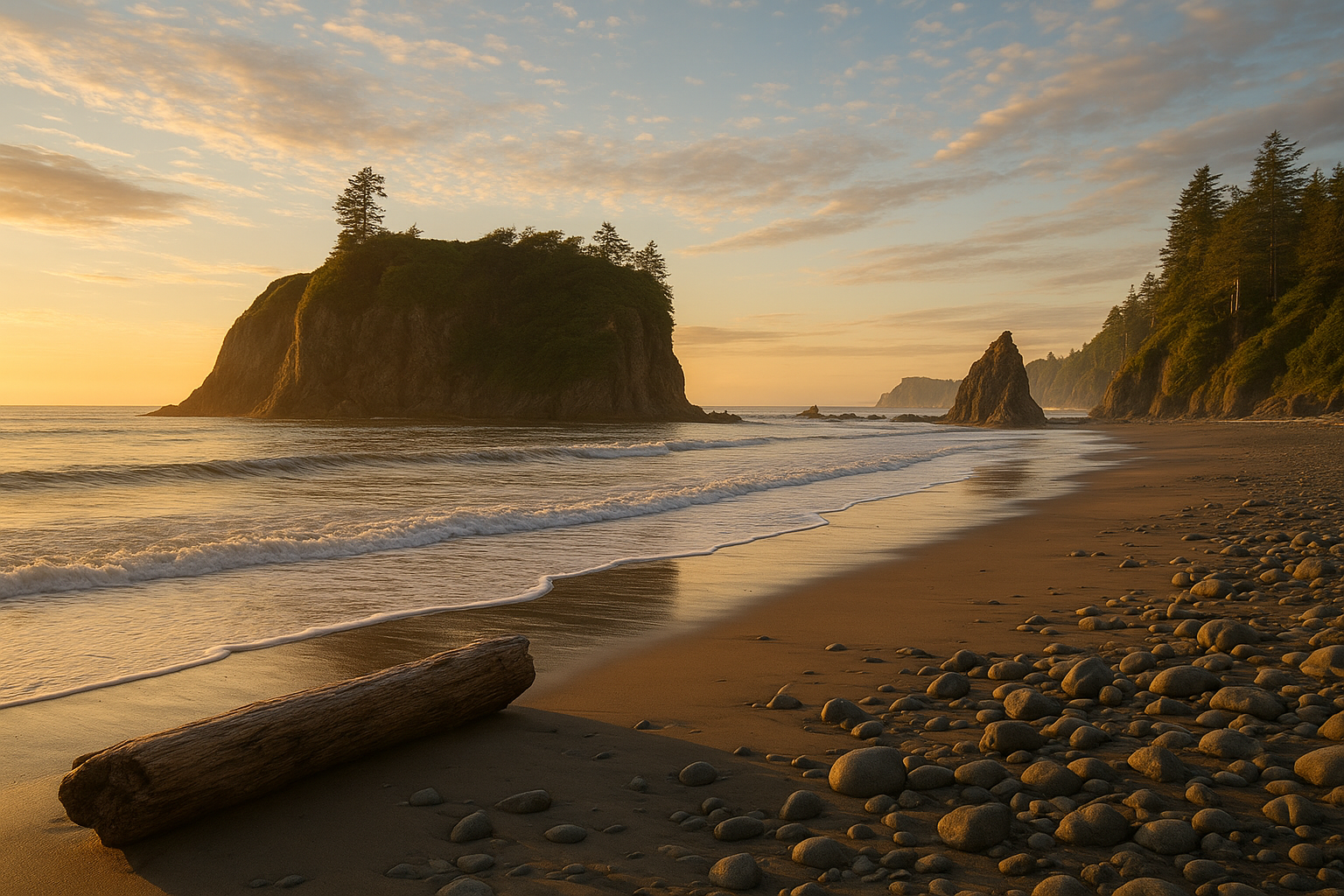
Ruby Beach, one of the most iconic stretches of coastline on Washington’s Olympic Peninsula, is a place where rugged Pacific beauty meets quiet wilderness. Known for its dramatic sea stacks, wind-swept driftwood, and misty horizons, it’s a destination that feels wild, cinematic, and deeply calming.
Why Visit Ruby Beach
Dramatic Coastal Scenery
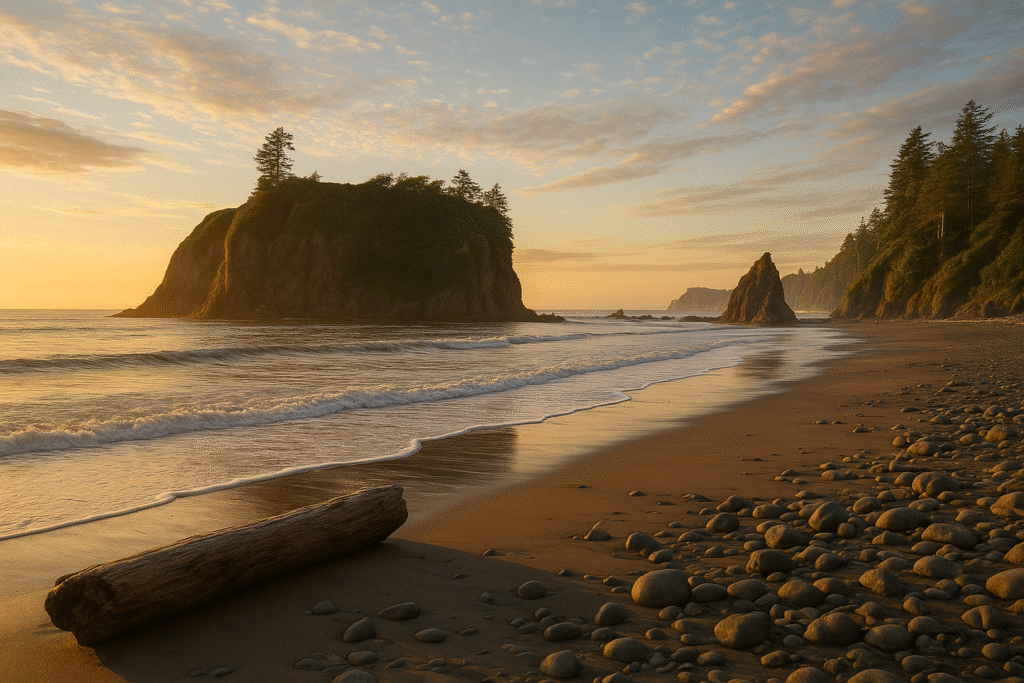
Ruby Beach is famous for its towering sea stacks, scattered across the shoreline like ancient stone guardians. The dark sand, scattered driftwood, and soft marine fog create a dreamlike backdrop perfect for photography, reflection, or simply taking a slow coastal walk.
Tidepooling and Wildlife
At low tide, the beach reveals rich tidepools full of sea stars, anemones, hermit crabs, and clusters of mussels. Offshore you might spot seabirds riding the wind or even whales breaching in the distance during migration seasons.
Family-Friendly, Adventurer-Friendly
With only a short walk from the parking lot, Ruby Beach is accessible to most visitors while still feeling wild and remote. Whether you’re coming for tidepooling, photography, beachcombing, or sunset watching, it’s a place that welcomes all types of explorers.
What to Do at Ruby Beach
Photography
Sunrise and sunset offer breathtaking views—warm light hitting sea stacks, soft fog rolling across the horizon, and reflections in the wet sand that look like a natural mirror.
Beachcombing
Driftwood logs, smooth stones, and unique shells make the beach a treasure hunt every time you visit.
Short Hikes
While Ruby Beach itself is the main attraction, the surrounding area connects with sections of the Olympic Wilderness Coast. A simple shoreline walk can feel like an expedition.
Gear Checklist
Essentials
- Waterproof boots or sandals
- Warm layers (coastal temperatures change fast)
- Rain jacket
- Backpack
- Snacks & water
- Camera or smartphone
- Sunscreen (yes—PNW beaches still require it)
Optional Enhancements
- Binoculars for wildlife
- Lightweight tripod
- Towel or blanket for sitting
- Collapsible trekking poles for slippery rocks